
When Life Changes Us: Understanding Resilience and Post-Traumatic Growth

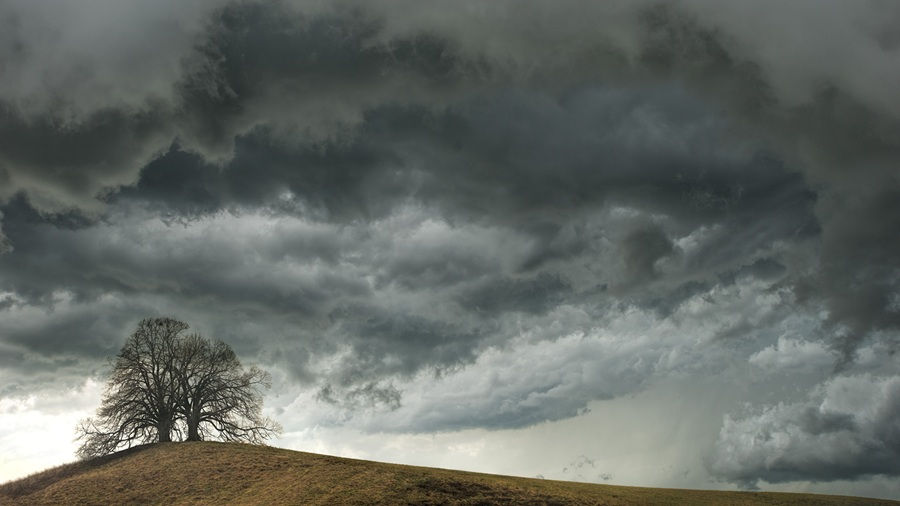
What happens when we face illness, loss, trauma, or other difficult experiences?
Sometimes experiences change us.
A serious illness, the loss of someone we love, an unexpected diagnosis, an accident, a broken relationship, or another profound disruption can challenge the way we make meaning about ourselves and about the world around us. Yet people respond to adversity in very different ways.
Some struggle deeply. Some manage to continue functioning despite difficulties. Some gradually recover after a period of disruption. And some eventually describe something more: they say that, through their struggle, they discovered a new meaning, deepened their relationships, found their vocation (which was the case for myself), developed a different perspective on life with a stronger sense of themselves.
Psychology has developed different concepts to help us understand these constructive responses: two of them are Resilience and Post-Traumatic Growth (PTG). They are related, but they also hold significant differences. Understanding the difference can help us think more compassionately about what it means to live through difficult experiences.
What is resilience?
Resilience is often misunderstood as being strong, unaffected, or ability to "bounce back" quickly. However, resilience does not mean that nothing hurts.
A resilient person can be frightened, exhausted, sad, angry, uncertain, or overwhelmed. They can need help. They can struggle with their faith. They can have days when simply getting through the day feels like an achievement. They might even need to give up some old ambitions, reorient their future expectations from life.
Resilience is better understood as a person's capacity to adapt in the presence of adversity and to maintain or regain psychological functioning.
A systematic review by Donna Stewart and Tracy Yuen examining resilience specifically among people living with physical illness found that resilience was associated with a range of psychological, social, behavioral, and illness-related factors. These included hope, optimism, self-efficacy, acceptance, active coping, social support, self-care, and spirituality.
Obviously, our level of resilience is not something that we are born with. It can be influenced by our relationships, our circumstances, the resources available to us, the way we cope, and the ways in which we understand what is happening to us. And this means that resilience is not necessarily about returning to exactly who we were before.
Therefore, the question may not be, "How can I become the person I was before?"
It may be: "How can I continue to live meaningfully within the life I have now?"
What is post-traumatic growth?
Psychologists Richard Tedeschi and Lawrence Calhoun developed the concept to describe positive psychological changes that can emerge through the struggle with highly challenging life experiences.
These changes can include:
a greater appreciation of life;
deeper or more meaningful relationships;
recognition of new possibilities;
a stronger sense of personal strength;
and changes in spiritual or existential understanding.
Post-traumatic growth does not mean that the traumatic experience itself was good.
A person can say:
"I would never have chosen this experience."
and at the same time:
"Something meaningful changed in me because I went through it."
And there is no contradiction between these statements!
Growth does not erase suffering, justify suffering, or make the suffering desirable.
It describes the possibility that something new can emerge through the struggle.

Resilience and post-traumatic growth: what do they have in common?
Resilience and PTG share some important characteristics. Both are concerned with how human beings respond to adversity and both move beyond a purely pathological understanding of suffering. Instead of asking only, "What has gone wrong?", they also ask:
"How can a person adapt?" Both can involve psychological, relational, and spiritual resources. And neither is simply a personality label.
A person's response to adversity can change over time and can be influenced by the resources and relationships available to them. Person's spiritual practices definitely make great impact on this process as well.
In Stewart and Yuen's review of resilience in physical illness, spirituality appeared among the factors associated with resilience. In the literature on post-traumatic growth, spiritual and existential change is also recognized as one possible area of growth. This creates an interesting meeting point between psychology and spiritual life. Our relationship with God, our beliefs, our communities, our practices of prayer, and the meaning we make of our experiences may all become relevant to how we navigate adversity.
So what is the difference?
Perhaps the simplest way to put it is this:
Resilience questions how we adapt to adversity. Post-traumatic growth questions what positive changes may emerge through our struggle with adversity.
Resilience can involve maintaining or regaining our ability to function. Post-traumatic growth involves perceived positive transformation beyond where we were before in particular areas of life. A person can therefore be resilient without experiencing post-traumatic growth.
And a person can experience post-traumatic growth while still experiencing significant distress. They are not two competing destinations. They are different ways of understanding what may happen in response to adversity.
To give an example, imagine two people who experience a similar life-changing event.
One might say:
"It was incredibly difficult, but my family, friends, faith, and the ways I learned to cope helped me get through it. I feel that I have found a way to live with what happened."
This may be an expression of resilience.
Another person might say:
"What happened completely changed how I understand my life. I appreciate relationships differently now. I have discovered strengths I didn't know I had, and my relationship with God has changed."
This second expression may involve post-traumatic growth.
A person could obviously experience both, and perhaps there is no need to vote which response is better. One person may need to recover stability, while another person may find that the experience fundamentally changes their understanding of life, and another may experience both at different points. Our inner lives have too many dimensions to express in a single trajectory, and it has many hidden surprises in the depths of our hearts and souls to express in a single formula.
The danger of making growth an expectation
When we hear about post-traumatic growth, it can be tempting to assume that suffering should eventually make us stronger, wiser, more grateful, or more spiritual. But growth should never become another burden placed on someone who is already suffering. Neither suffering should become desirable in order to achieve post-traumatic growth.
A person who has just received a serious diagnosis does not necessarily need to hear:"This will make you stronger." Someone who has lost a loved one does not need to be told: "Everything happens for a reason." And someone who is struggling does not need to feel that they are somehow failing because they cannot yet see a positive outcome.
Sometimes surviving the day is really enough and all we need.
Sometimes resilience requires asking for help, and it is so Ignatian to do so.
Sometimes it looks like accepting doctor's treatment plan.
Sometimes it looks like allowing ourselves to grieve.
Sometimes it looks like saying, "I don't understand why this is happening."
And sometimes it looks like a very simple prayer:
"Jesus, stay with me."
Growth might come in God's timing.
The house on the rock
There is a beautiful image in the Gospel of Matthew that can help us reflect on resilience.

Jesus tells the story of two people who build houses. One builds on rock; the other builds on sand. Then the storm comes, the rain falls, the floods rise and the winds blow.
For Christians, this image offers a powerful way of thinking about resilience.
Our faith does not promise us a life without storms. It does not mean that faithful people will never experience illness, grief, disappointment, fear, or loss.
Instead, our task is to ask: What are we building our lives upon? What relationships are sustaining us? What are the most important things in the core of our lives? And how do we remain in Him when circumstances become uncertain?
Building before the storm
Resilience is not something we can always begin developing only when the storm arrives. Prayer, discernment, reflection, and spiritual practice can become part of the foundation we build beforehand.
If you would like to begin developing a more regular practice of discernment and prayer, I have created 30-Day Discernment Retreat with the Saints as a practical self-retreat. Each day offers a reflection, a practice, and a prayer to help you become more attentive to God's presence and guidance in ordinary life.
You can explore the book and other spiritual resilience resources at https://www.discernmentedge.com/resources.
other Resources
Stewart, D. E., & Yuen, T. (2011). A systematic review of resilience in the physically ill. Psychosomatics, 52(3), 199–209.
Tedeschi, R. G., & Calhoun, L. G. (2004). Posttraumatic growth: Conceptual foundations and empirical evidence. Psychological Inquiry, 15(1), 1–18.
Hefferon, K., Grealy, M., & Mutrie, N. (2009). Post-traumatic growth and life threatening physical illness: A systematic review of the qualitative literature. British Journal of Health Psychology, 14(2), 343–378.
Bonanno, G. A., Chen, S., & Galatzer-Levy, I. R. (2023). Resilience to potential trauma and adversity through regulatory flexibility. Nature Reviews Psychology, 2, 663–675.


Comments